Showing posts with label Europe. Show all posts

Thursday, December 27, 2007

Reissue: A Short History of the Quadruple House


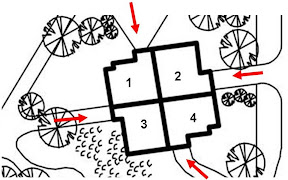
Wright's Quadruple concept


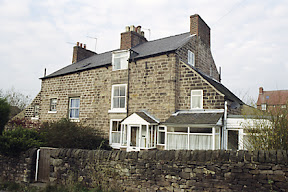
The ‘cluster' or quadruple house was conceived as a solution to the housing problems for workers. In Shrewsbury in England, the Cite Ouvriere in Mulhouse in France, and in Ardmore, Pennsylvania, they came as better alternatives to the terrace house and back to back tenements.

In all these instances, the introduction of the quadruple houses can be linked to a wider movement for progressive change: in Shrewsbury, Charles Bage the inventor of the cluster house is more famous for being the designer of the first iron frame building for his textile mill; in Mulhouse, the socially conscious textile mill owners financed a company that introduced the first ‘monthly payment' arrangement that enabled workers to own their own houses - an important precursor to the modern house mortgage loan.

The quadruple house was perhaps the most economical version of the Usonian houses that Frank Lloyd Wright designed during the Great Depression. Later, during the War years, he could have built more than just the two blocks in Pennsylvania, if his plans for Massachusetts were not blocked by parochial sentiments of architects in that state.

But strangely, the quadruple house type remains largely an unusual type of building. Whilst one can easily find various versions of terrace houses or semi-detached houses all round the world, but that is not the case for the quadruple house. Outside of Malaysia and the pioneering examples here, I don't know of any housing scheme that has used this building type. If anyone reading this should know of one in their country, I'd be grateful if you'd email me with information.

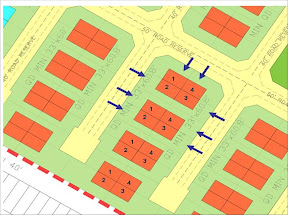
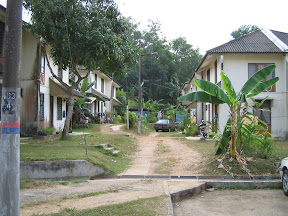
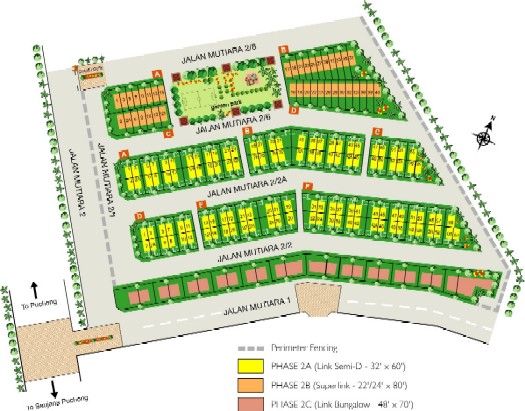
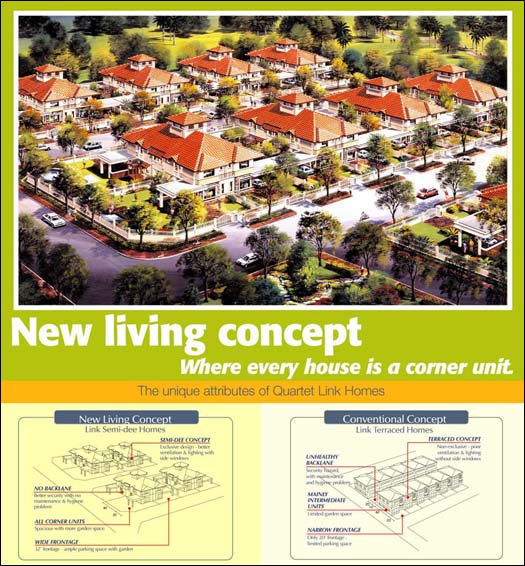
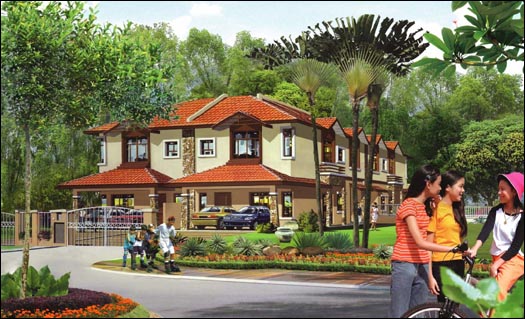
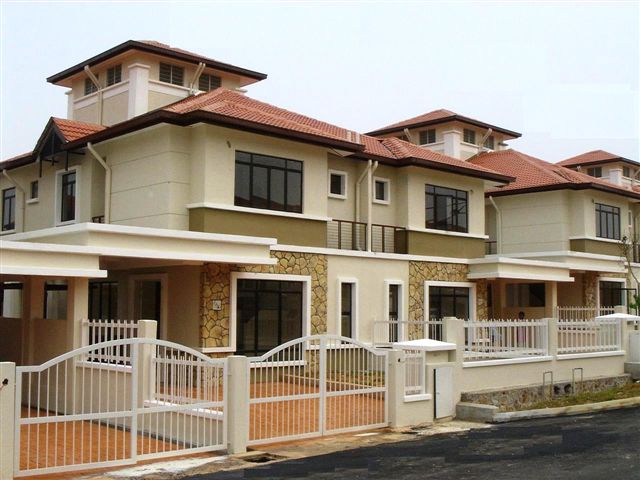
In Malaysia, the early cluster houses tended to be low-cost housing for low-income workers, but recently, developers have introduced them as medium-high cost houses that are priced higher than terrace houses but cheaper than semi-detach houses. Below is a typical example in the outskirts of Kuala Lumpur, the capital city.


A more prosaic example of the Quadruple House


PREVIOUS POSTS:


Bage: Inventor of the Quadruple House


Frank Lloyd Wright's Quadruple House


Early Quadruple Houses in Malaysia


Source: www.malton.com.my

First Posted on 2nd. September, 2007


If you are interested in the continuing evolution of the Quadruple House, you might want to look at Tessellar > Introduction

Enter your Email


Preview | Powered by FeedBlitz

Subscribe in a reader


Technorati Tags:, ,

Wednesday, October 17, 2007

The Children-Friendly City of Delft

Delft , a small city of about 100,000 people in the Netherlands, pioneered the concept of the child-friendly street called from way back in the 60’s.

The idea of the child-friendly street can be traced back to Colin Buchanan and his report in 1963 for the British Government - “Traffic in Towns”. Buchanan, a road engineer as well as an architect, saw the conflict between providing for easy traffic flow and the destruction of the residential and architectural fabric of the street. For the first time, road design was seen as not just to serve cars but people as well, and that included children.

The ideas in the report were not initially well received in Britain but in Holland, these theoretical concepts inspired Niek De Boer, professor of urban planning at Delft University of Technology. He saw in Buchanan's concepts a possible solution to overcoming the contradiction between streets as places for children's play as well as car use. De Boer designed streets so that motorists would feel as if they were driving in a "garden" setting, forcing drivers to consider other road users. He invented the term ”woonerf” which roughly means “residential yard" in Dutch.

People Power


At the same time in the same city, residents of an alley in the city centre converted a derelict plot into a play area, with a little help of the municipality and a paint factory. Walls were painted, huts were built for hiding and climbing and trees and shrubs were planted.
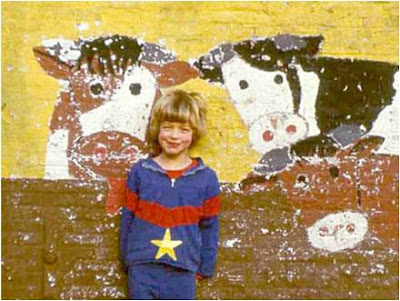

Hopstraat, Delft

In another area – in a densely-built district with small houses - a group of residents squatted one of the streets. They claimed it for playing, planting and sitting. The municipality decided to allow this change to happen, recognizing that there was a lack of play area in these working class areas.
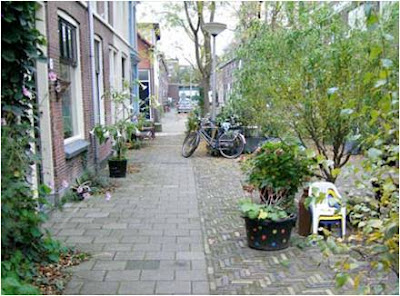

Tuinstraat, Delft

This started a process of redefining and redesigning streets that can be described as: ‘streets for children, where cars are allowed, but only within limitations’. Theory and practice merged, with new regulations new types of streets where:
  • car speeds were reduced

  • pedestrians had right of way to the whole width of the road

  • space was created for trees where there was only tarmac

  • residents were given a small semi-private zone in front of their houses with greenery and benches


This new type of street could relate back to the historic ‘streetscape’ of the canals streets in Holland as inspiration.
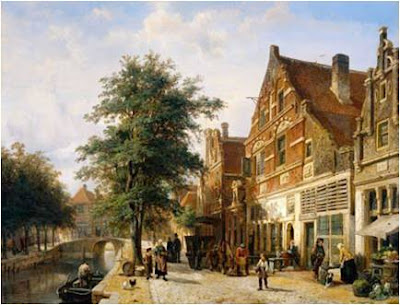

Zuiderhavendijk Enkhuizen ( Cornelis Springer, 1886 Rijksmuseum, Amsterdam

Stehen Schepel wrote in "Woonerf Revisited":
“The narrow streets alongside the canals performed many functions. Goods were unloaded and traded or loaded again after temporary storage. The ‘stoep’ or sidewalk running in front of the house was used for display and trade, but also for sitting outside and meeting other people. The middle of the street was primarily for pedestrians, but also used by horses with a cart or a sledge. Busy street life brought about a lot of experience for the young. Trees made for an agreeable environment.”


The concept of ‘woonerf’ rather quickly found acceptance by the Dutch government. Special rules for traffic on a ‘woonerf’ were issued. The idea of ‘woonerf’ was adopted by many local authorities and spread to many other countries.

The experience in Delft, shows how cities can be children-friendly by making the streets in front of their homes safer. Linking these streets together has resulted in a whole neighbourhood that is accessible for children to enjoy.

Again from Steven Schepel:
Safety

“Low speed minimizes the risk of serious accidents. It leaves road-users more time to avoid a collision and shortens the distance covered, first during the time that it takes to react and then during the process of slowing down."

"If a collision cannot be avoided after all, the blow will be less severe and the injuries will be less serious. But nearly always in incidents at low speed everyone will escape with a fright."
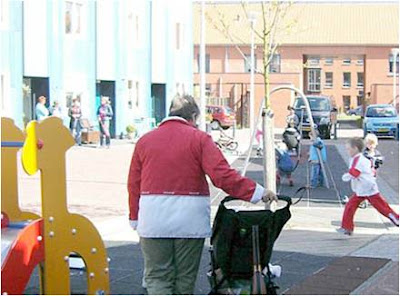


"Security for children depends largely on the presence of adults, not just pedestrians and other non-motorized road users, but also people watching the street out of living rooms and kitchens."

"The interaction with adults (for imitation, confirmation, or out of just curiosity) makes the street extra attractive for children to play in and is a good opportunity for adults to meet one another casually.”

Independent movement

“Independent mobility enables children to participate in all sorts of activities without burdening the parents to fetch them each time. Finding their way they get better acquainted with the outside world and develop their social skills. Independent mobility starts with freedom of movement in the street.Prerequisites are low speed (allowing time to make eye-contact and assess mutual behaviour)and limited amounts of car and cycle traffic."

"Independent mobility must not be confined to freedom of movement in a single street. So the street should be part of a large, wide child friendly habitat. Delft serves as an example, showing that a comprehensive rearrangement of a large district, like the complete city-centre, is feasible. This area, which is 1500 m long and 1000 m wide, is not cut by any major road. However buses and cyclists can cross the town in all directions."
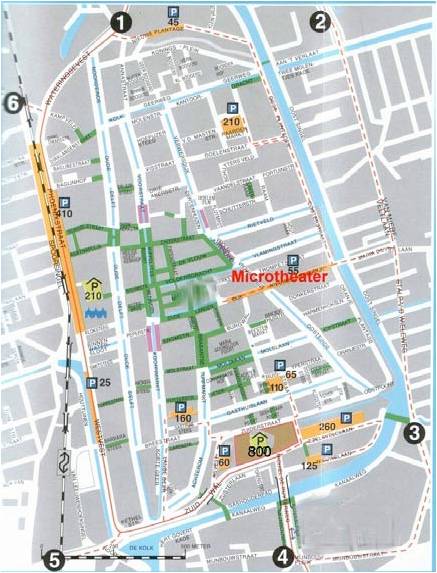


City-centre, Delft

"Moreover child friendly districts should be interconnected by safe, friendly routes for cyclists and pedestrians, for children and elderly alike. Again, Delft serves as an example by having completed a tightly knit, comprehensive network of routes for cyclists and pedestrians all over the town.”
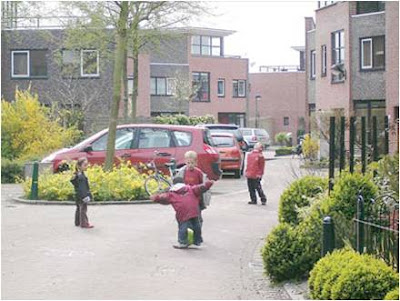


Enjoying life in the city

“In order to foster experience and enjoyment, a child-friendly street can best be conceived as a sequence of outdoor living-rooms, each with its own character.”
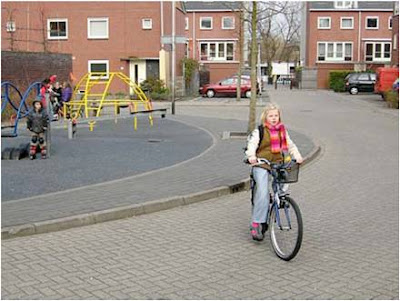

Playgrounds on the street: they show everybody that this is a street for living.
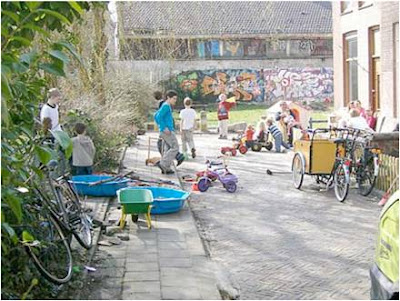

Rotterdamseweg, Delft

The people of Delft believe that:
"a city that is friendly to children is a city friendly to all!"


References: “WOONERF REVISITED - Delft as an example” by Steven Schepel, Childstreet Conference. Delft, 2005: 2 Mb pdf Download
Streets for People Too, Architectureweek

Related Post:


Enter your Email


Preview | Powered by FeedBlitz

Subscribe in a reader


Social Bookmarking
Add to: Digg Add to: Del.icio.us Add to: Reddit Add to: StumbleUpon Add to: Yahoo Add to: Google Add to: Technorati Information

Sunday, October 14, 2007

Miletus - the Grid in Ancient Greece

The origin of Greek orthogonal planning tradition was based on the established civilizations of the Near East, for example, Kahun in ancient Egypt and Babylon in Mesopotamia. Greek early cities grew from villages, but when they colonized new lands, they adopted the grid system. The rebuilding of cities also presented another opportunity for orthogonal town planning: Miletus, on the coast of Asia minor, was razed by the Persians in 494 BC before it was rebuilt on a grid. The rebuilt city became the basis for the first recorded town-planner - Hippodamus who came from that city, and who certainly would have developed his town planning ideas from this example.


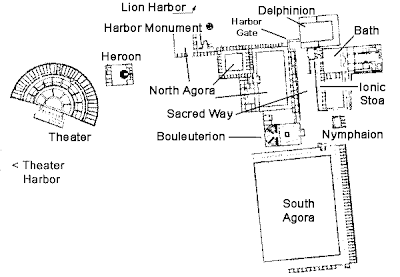
Miletus after 494 BC

Gridded Greek cities were subdivided by a system of wide main roads (plateau) and narrow streets (stenopoi). In most grids the streets intersected at right angles (orthogonal grids). The Greek town also had a complement of public buildings to match that of modern cities today.


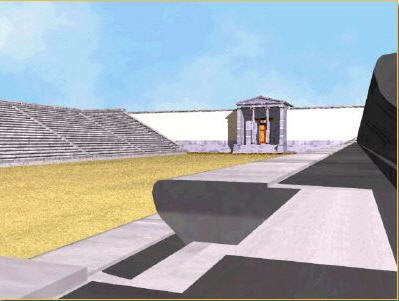
The Bouleuterion (Council House)served as an assembly hall for citizens.


The Stadium of Miletus, where athletic games took place.


The Gymnasium of Miletus was a building complex that served athletic, religious and ceremonial purposes.


The Theatre of Miletus was built during the Hellenistic period (4th century BC), and underwent subsequent expansions and modifications up to Late Roman times (2nd century AD).


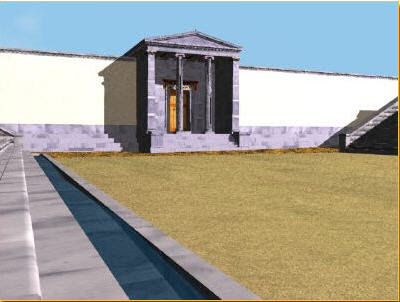
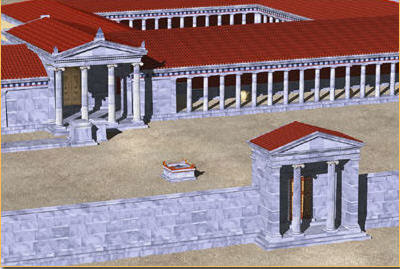
The North Agora of Miletus was constructed during the rebuilding of the city after its destruction by the Persians in the 5th century BC. It was a trading centre where other public activities also took place, and was subsequently expanded, finally becoming an extended complex with stoas and wide open spaces.


The Delphinion was an open-air sanctuary dedicated to Apollo Delphinios. It also served as the Public Archive of the city.

This is a later view of Miletus:


Picture above from: www.caesar3.it. All other photos from: www.ime.gr
References: www.fofweb.com

Related Post:


Enter your Email


Preview | Powered by FeedBlitz

Subscribe in a reader


Social Bookmarking
Add to: Digg Add to: Del.icio.us Add to: Reddit Add to: StumbleUpon Add to: Yahoo Add to: Google Add to: Technorati Information

Friday, October 5, 2007

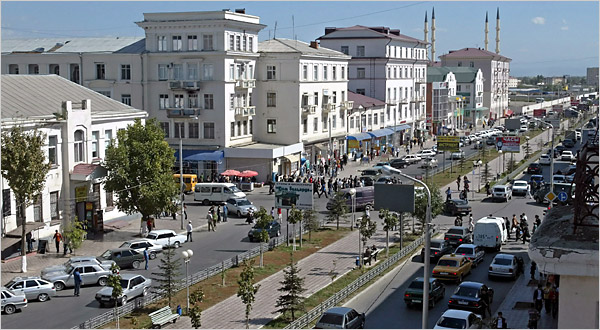
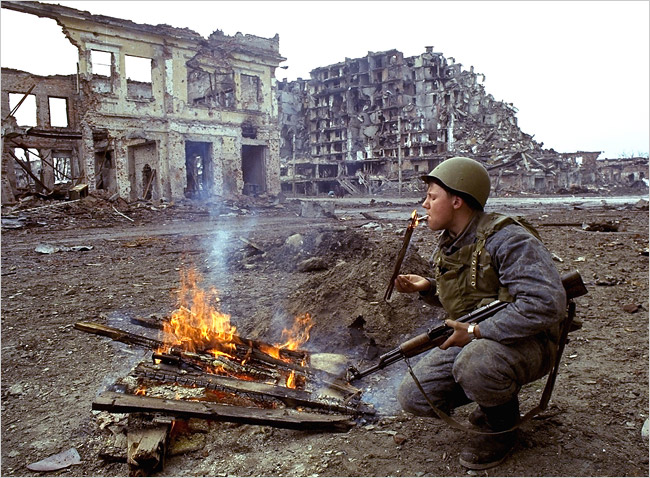
Grozny Revival


The New York Times ran an interesting piece on Grozny in Chechnya. Here an amazing effort has been made to rebuild the war-scarred city that even two years ago had seemed “beyond saving and repair.” Russia was said by analysts to be in an unwinnable war in Chechnya, but the country is now under the firm control of Ramzan Kadyrov. Ramzan is the son of Achmad, at one time, the rebel mufti of Chechnya and later, it’s president.


The Kadyrovs started as Chechyan rebels but became Kremlin allies in 1999. The younger Kadyrov became president early 2007 at the age of 30, three years after his father's assasination in 2004. In Wikipedia, he is quoted to have said: “...Putin is a beauty. He thinks more about Chechnya than about any other republic. When my father was murdered, he [Putin] personally came down and went to the cemetery. Putin stopped the war. Putin should be made president for life. Strong rule is needed.”

Despite a chilling reputation for human rights violations, the general opinion is that Ramzan is the only person who can keep the large number of armed former rebels under control.

He is also credited with getting Grozny rebuilt. The NYT article quoted Chechyans:

“I compare how we used to live, and it is like we are in a fairy tale now,” said Zulika Aliyeva, 46, whose home was destroyed when Russia sacked Grozny in 1999 and 2000 and who spent years squatting in a ruined building. The building she moved to recently has been partly repaired.

Alexei Malashenko, an analyst at the Carnegie Moscow Center who studies Chechnya and recently visited the republic again, said the pace of change was astounding. “I couldn’t believe I was in Grozny,” he said.


It was the Russian forces which flattened Grozny in 1999 and 2000. Russia’s defeat of the heart of the rebellion in Chechnya appears to flow, in the simplest sense, from a two-stage formula: extraordinary violence, followed by extraordinary investment.

Thanks to Peter Davis who sent me the NYT article.

Related Post:


Enter your Email


Preview | Powered by FeedBlitz

Subscribe in a reader


Social Bookmarking
Add to: Digg Add to: Del.icio.us Add to: Reddit Add to: StumbleUpon Add to: Yahoo Add to: Google Add to: Technorati Information