Showing posts with label The US and the Americas. Show all posts

Thursday, December 27, 2007

Reissue: A Short History of the Quadruple House


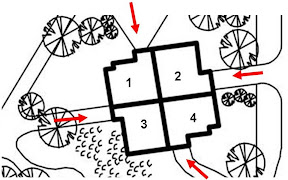
Wright's Quadruple concept


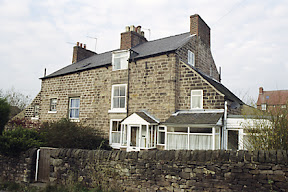
The ‘cluster' or quadruple house was conceived as a solution to the housing problems for workers. In Shrewsbury in England, the Cite Ouvriere in Mulhouse in France, and in Ardmore, Pennsylvania, they came as better alternatives to the terrace house and back to back tenements.

In all these instances, the introduction of the quadruple houses can be linked to a wider movement for progressive change: in Shrewsbury, Charles Bage the inventor of the cluster house is more famous for being the designer of the first iron frame building for his textile mill; in Mulhouse, the socially conscious textile mill owners financed a company that introduced the first ‘monthly payment' arrangement that enabled workers to own their own houses - an important precursor to the modern house mortgage loan.

The quadruple house was perhaps the most economical version of the Usonian houses that Frank Lloyd Wright designed during the Great Depression. Later, during the War years, he could have built more than just the two blocks in Pennsylvania, if his plans for Massachusetts were not blocked by parochial sentiments of architects in that state.

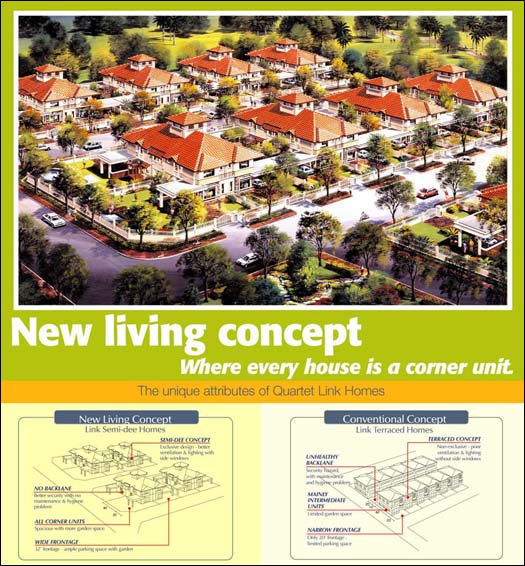
But strangely, the quadruple house type remains largely an unusual type of building. Whilst one can easily find various versions of terrace houses or semi-detached houses all round the world, but that is not the case for the quadruple house. Outside of Malaysia and the pioneering examples here, I don't know of any housing scheme that has used this building type. If anyone reading this should know of one in their country, I'd be grateful if you'd email me with information.

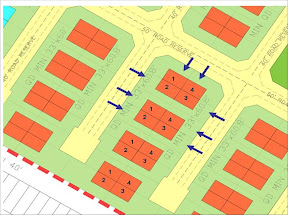
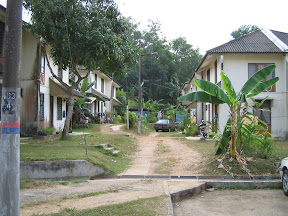
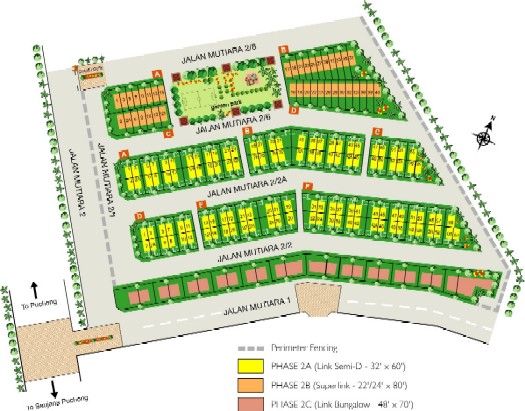
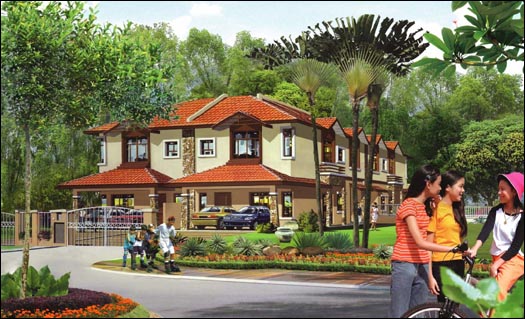
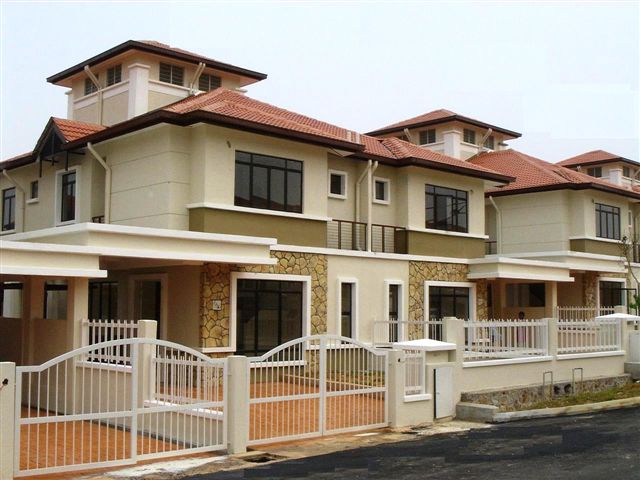
In Malaysia, the early cluster houses tended to be low-cost housing for low-income workers, but recently, developers have introduced them as medium-high cost houses that are priced higher than terrace houses but cheaper than semi-detach houses. Below is a typical example in the outskirts of Kuala Lumpur, the capital city.


A more prosaic example of the Quadruple House


PREVIOUS POSTS:


Bage: Inventor of the Quadruple House


Frank Lloyd Wright's Quadruple House


Early Quadruple Houses in Malaysia


Source: www.malton.com.my

First Posted on 2nd. September, 2007


If you are interested in the continuing evolution of the Quadruple House, you might want to look at Tessellar > Introduction

Enter your Email


Preview | Powered by FeedBlitz

Subscribe in a reader


Technorati Tags:, ,

Monday, December 17, 2007

Levittown #2

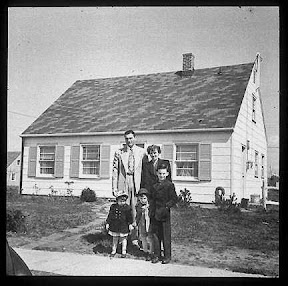
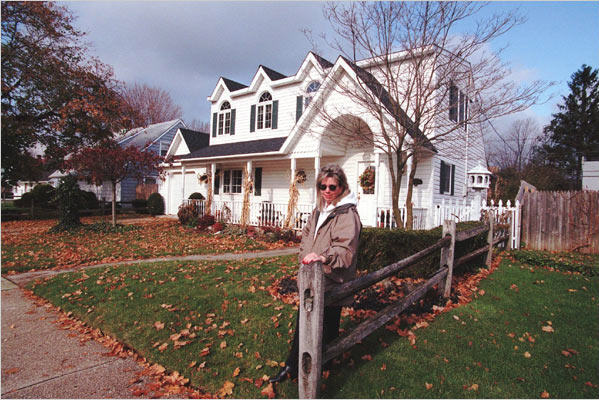
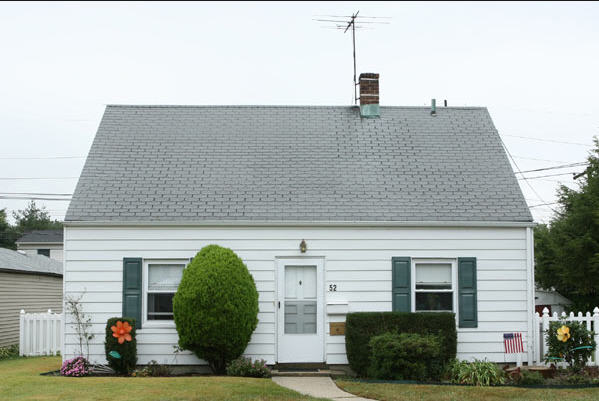
Years have passed and Levittown has changed. The landscape have grown and matured. The repetitive house designs have been replaced with individual renovations.


Individualized renovations, from NYT article

Levitt himself once declared, going back several years later, that the towns had changed beyond all recognition. They have mostly cha
nged for the better. Houses have generally become bigger. The people that live in them have become rich ( or perhaps richer people have moved in). The USD 8,000 houses have now been re-sold for over USD 400,000.

But some people have grown nostalgic and are looking to preserve some Levittown houses still in their original state!


A neighbourhood is made up of people, not houses, fromPeter Bacon Hales

It appears that nowadays in the US, ‘affordable housing’ is usually taken to mean subsidized rental housing for the poor. Many of these new housing look very pretty: they have to be designed to ‘blend-in’ the surrounding architecture – made to look like mansions or to overcome ‘not in my backyard objections’ (NIMBY) of local communities.

But they are not cheap – many costed over USD100,000 just to construct one unit. And being subsidized, they depend on charity or tax dollars. Whatever the drawbacks of the Levittown model, at least it brought widespread home ownership to a whole generation!


A grand new renovation, from NYT article

Images


Related posts

Subscribe to Tessellar Blog
and get a FREE E-Book


HONEYCOMB HOUSING
An Affordable Alternative to Terrace Housing


17MB, 49 A4 pages, 57 illustrations


Social Bookmarking
Add to: Digg Add to: Del.icio.us Add to: Reddit Add to: StumbleUpon Add to: Yahoo Add to: Google Add to: Technorati Information

Thursday, December 13, 2007

Levittown

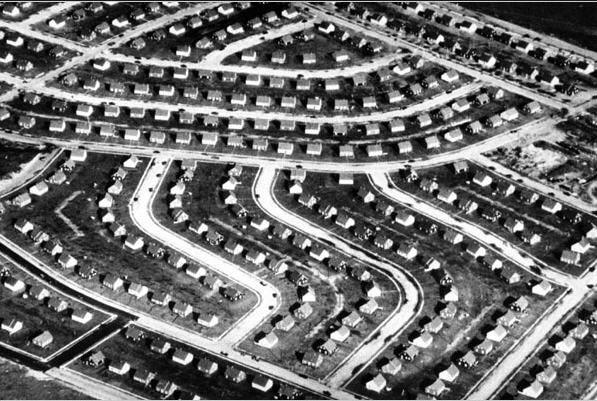
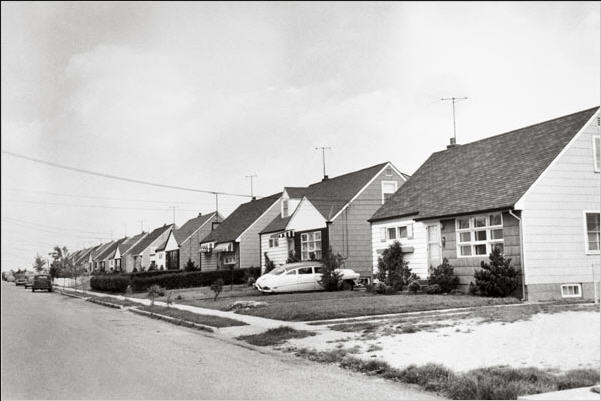
The post-war sprawling suburbia that American planners love to hate started of with the runaway success of the first Levittown in New York.


Just over 60 years ago in the US, returning G.I.’s made up the bulk of a huge pent-up demand for housing. The government introduced legislation that virtually guaranteed financing to residential developers and making housing loans easily available that .

Affordable Housing

Developers like Bill Levitt responded with very affordable little houses for under USD8000. And they could be purchased with a low down payment (or none) and low monthly mortgage payments spread out up to 30 years.

Levitt was able to offer these houses so cheaply because he was applying construction methods perfected in the deployment of prefab housing in the armed services during World War II. Bill Levitt had learned the techniques of rapid construction using standardized parts, tightly controlled suppliers of goods and services, and a workforce with highly specialized skills. He took the mass-production assembly line and converted it so that workers moved from site to site doing their specific targeted tasks.

A Simple Plan

The Levitt house combined extreme economy and the promise of an appropriate living space for an American family. Small at first, it could expand with time-- upward, first, then outward. Only the downstairs was finished: a tiny, two-bedroom detached dwelling on a concrete slab, with stairs to an unfinished "expansion attic" which could be converted with ease into a third and perhaps even a fourth bedroom, under the eaves.


The Community

These houses were arrayed along curved streets, rather than the rigid grid plans of older towns in the US. The new suburbs became sub-communities. Larger 'distribution' roads, that served to direct traffic around rather than through neighbourhoods, formed one set of boundaries. The parks or larger open areas formed centres of gravity drawing children and, inevitably, parents. This was the locale for tight social connections.


Right from the beginning Levittown and suburbs like it have been criticized for the lack of natural features, cookie-cutter designs, social class homogeneity and racial racial exclusion (in the early years). But these were houses rapidly built to satisfy a desperate demand; housing cheap enough for newly returning GIs; houses that were small enough to be convenient and easily maintained, large and expandable enough to accommodate growth in family and in wealth; houses that drew the family into a common area (often around the built-in TV); a community that embodied the child-centred and optimistic values of the post-war boom.


Images


Reference


Related posts:


Enter your Email


Preview | Powered by FeedBlitz

Subscribe in a reader


Social Bookmarking

Add to: Digg Add to: Del.icio.us Add to: Reddit Add to: StumbleUpon Add to: Yahoo Add to: Google Add to: Technorati Information

Tuesday, September 4, 2007

10 reasons why New Yorkers live longer


New Yorkers live longer than the average American. And not only that: their life expectancy has improved faster than the rest of the country. That’s strange! Aren’t city folks supposed to suffer from more pollution and stress? In an fascinating article by Clive Thompson, 'Why New Yorkers Last Longer' in New York Magazine last week I noted 10 reasons put forward:

#1 Better sanitation and environmental standards

The industrial revolution gave cites a bad name. They were overcrowded with people living next to dark satanic mills who would suffer from pollution and epidemics. But things have changed: sanitation and environmental standards improved in the last century.

#2 Less crime
Isn’t New York a dangerous place to live? Well, not so much. Better policing and other public health and safety measures introduced in the 1990’s have much reduced deaths from crime.

#3 Fix Aids

Another big drop was in HIV mortality rates. With the arrival of better drugs and health care death rates have come down.

#4 Fix Drug and alcohol addiction

In 1989, the infant-mortality rate was 13.3 babies per 1,000, but by 2004, it had been halved, to 6.1, both because medical treatment improved and because alcohol and drug addictions eased.


Cancer and cardiac arrest are down too. The number of people in the city dying from heart disease has dropped by a third in the last twenty years, and cancer rates have slid by nearly a fifth. And again in these cases, New York is getting healthier faster than the rest of the U.S. Why?

#5 Reduce smoking

A smoking ban in public places was introduced in 2003 and it had an immediate effect: The number of deaths attributable to smoking has decreased from 8,960 in 2001 to 8,096 in 2005, a drop of 10 percent.

#6 More exercise

The easiest way to tell a New Yorker from an out-of-towner is by walking speed: The natives blast down the sidewalk at blitzkrieg pace, and the visitors mosey along like pack mules. A recent ranking of cities found that New York has the fastest pedestrians in the country. Research has shown that walking speed has a strong health benefit.


#7 More friends
When you’re jammed up against your neighbors, it’s not hard to find a community of people who support you—friends or ethnic peers—and this strongly correlates with better health and a longer life.

#8 Better amenities
A big city has bigger hospitals that can afford better equipment—the future of medicine arrives here first. New Yorkers also tend to enjoy healthier food options, since demanding foodies (vegetarians and the like) are aggregated in one place.

#9 Richer cultural scene

There’s also a richer cultural scene than in a small town, which helps keep people out and about and thus mentally stimulated.

# 10 More prosperous
It is a well known fact that rich people tend to live longer than the poor. New Yorkers have enjoyed a long period of economic growth since the 1990’s. But as the rich became richer – and this is the little sting in the tail - the rising cost of living in the city has driven out the poor. Gentrification!


Related Post:


Enter your Email


Preview | Powered by FeedBlitz

Subscribe in a reader


Social Bookmarking
Add to: Digg Add to: Del.icio.us Add to: Reddit Add to: StumbleUpon Add to: Yahoo Add to: Google Add to: Technorati Information