Showing posts with label Architectural Theory. Show all posts

Wednesday, September 3, 2014

Jan Gehl, “Life Between Buildings: Using Public Space”, 1996


Last March I had the fortune of attending a talk by Jan Gehl for at The Center for Liveable Cities in Singapore. Gehl's work stretches back to the 1970's and the first editio "Life Betnween Buildings" pretty much foreshadowed his achievements since then. It was a lively lecture he gave, and it prompt me to reread his book 91996 edition:

How can we design the outdoor environment to encourage its use so that cities and residential areas become more vibrant and lively? For more than 40 years, Jan Gehl has worked to answer that question through a cycle of observing public spaces, making gradual changes and observing the results. He has been credited with being a large influence in transforming Copenhagen into the pedestrian and bicycle friendly city that it is famous for today. In fact, “Life between Buildings” so long after its first publication1971 is still in print.

It starts in Section 1 with an analysis of what outdoor activity consists of, how it can be categorized and measured, followed by observations on why outdoor activity is important for people. With measurement, various sorts of physical environment can be compared to each other with respect to how they meet human needs. He cites the work of Appleyard in Boston which demonstrated how highly-trafficked streets had less outdoor activities compared to streets which had less traffic.

The author suggests that in Europe, medieval towns are better than towns that were planned in the Renaissance period (according to mainly aesthetic principles) and that were planned in the Modern period (according to functionalist principles). The reason is that medieval towns evolved through time in a way that allowed continual adjustment and adaptation of the physical environment to city functions. His recommendation is that urban planners move away from functionalist car-dominated principles towards creating desirable conditions for the various sorts of outdoor activities and that these changes should be done incrementally.

Section 2 looks at the interplay between social activity and the physical environment, and identifies diffuse physical structures like sprawling suburbs that hinder social contact as opposed to hierarchical structures that try to correspond to social structures. He refers to the work of Oscar Newman which suggested that residential layouts create a hierarchy of private, semi-private, semi-public and public spaces. Such a structure would strengthen natural surveillance, help the residents know ‘who belong’ and improve the possibility of making group decisions that concern shared problems.

The next chapter, drawing mainly on the work of Edward T. Hall, deals with the issue of scale, distance and speed as how people perceive them in the social context. Whilst walls, long distances, high speeds, multiple levels and orientation away from others, tend to isolate people from each other, the absence of walls, short distances, low speeds, single levels and orientation towards others, encourage contact with other people. Designing external spaces with the desirable features have been shown to be extremely effective - increasing the number and duration of people outdoors has the effect of attracting even more people to come out. People are attracted to crowds.

In Section 3, the author looks at design factors that encourage or discourage outdoor activities under four dichotomous headings: Assemble or to disperse? Here examples are shown of small intimate spaces and of streets that offer varied narrow shop-fronts that encourage people to assemble in stark contrast to streets that are too wide, and with facades that are too bare and monotonous which encourage people to disperse.

Segregate or integrate? Should residential, commercial and industrial buildings be segregated from each other as they are in modern cities, or should these different functions be interwoven as they were in medieval cities? The author makes the case that the university in a city works much better than a campus university. Should cars and pedestrian traffic be segregated? The author argues that slowed down traffic integrated with pedestrians works much better than traffic dominated streets and situations where cars and pedestrians are segregated from each other.

Repel or attract? It is argued that houses should have front yards that create semi-private buffer between the public streets and private homes. These soft edges bring residents outdoors where they are more likely to engage with neighbours and passers-by. Small shops and playgrounds too have the same effect by attracting residents outdoors. Open up or close in? Gehl here recommends that public buildings open up views into the interiors as a way of creating interest from the streets.

In Section 4 Gehl reiterates his arguments in even more detail as he discusses design features that encourage walking, standing, sitting, seeing, hearing and talking. He ends the book by giving advice on designing the public side of buildings by looking at a 1977 comparative study of outdoor activity along 12 residential street sections in cities in Ontario, Canada: buildings with “soft edges” where there is easy access in and out, good staying areas in front of the houses with something to do and work with. Jan Gehl loves watching people and this books is generously illustrated with photos of people in public spaces.

“Life Between Buildings: Using Public Space” by Jan Gehl, translated by Jo Koch and published by Arkitektens Forlag in 1996.

Friday, August 29, 2014

Gan Hock Beng's Molecular Architecture


This is an audacious new concept for housing that plays on the possibility of a creating complex habitat from a few basic elements.


MA1 - Molecular Architecture from Ma1 on Vimeo.

Learn more about the architect Gan Hock Beng behind it at MA1 - Molecular Architecture

Friday, December 28, 2007

Reissue: What Makes a City?


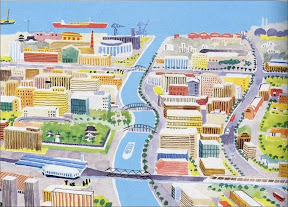
Images of various historical monuments, signature buildings, great urban spaces or other famous sights are often associated with the idea of a city. But they merely describe the form of the city, not its substance.

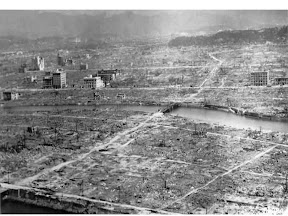
Cities are not just the buildings. Remarkably, a city can still survive when its buildings have been gutted. Hiroshima lived though the Bomb. Throughout history, cities have been devastated by natural or human disasters, but they often get rebuilt, when its people chose to do so.

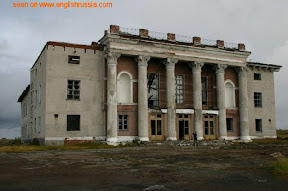
There are places though, complete with buildings and roads, but which are devoid of people. But these are not cities; deserted by their erstwhile inhabitants, they are just ghost-towns.

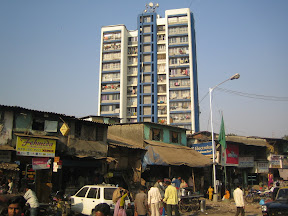
The most vibrant towns are sometimes over-crowded, squalid and ugly, but despite these disadvantages, they continue to be magnets - drawing people to them.

At about 600 BC, Alcaeus wrote of the cities of Greece:

"Not houses finely roofed nor the stones of walls well built nor canals nor dockyards make the city, but men able to use their opportunity."


Previous Posts:

Hiroshima 6th August, 1945


Rising from the Ashes


Ghost Towns


Slums of Hope


Coming:


Enter your Email


Preview | Powered by FeedBlitz

Subscribe in a reader

Tuesday, December 25, 2007

Reissue: Sheds versus Monuments

Six months and 125 posts ago, I wrote this:

"A bicycle shed is a building; Lincoln Cathedral is a piece of architecture"

Nikolaus Pevsner


This was the first sentence I found in the "Outline of European Architecture", top of the reading list in my first year doing architecture in University thirty years ago.

This blog is more about the bicycle sheds of this world rather than cathedrals. I am interested in low-cost affordable housing solutions – aesthetics is important, but not really the most important. My belief is that if we work hard to solve the social, environmental and economic problems of housing, the result will not necessarily be ugly.

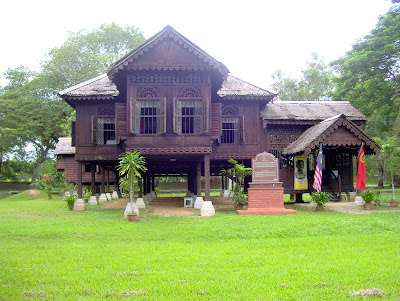
There is architecture that is created by architects; but also architecture created by non-architects. By ordinary people, all round the world. This is Vernacular architecture, and it is a fascinating study. Buildings built by people for themselves using the materials available to them in the best methods that they knew how, making it suitable their way of life, their needs, culture and climate. They used their limited resources in ingenious ways, achieving functional and beautiful forms. A by-product of this process of folk building through the ages is indeed a distinctive identity that communicates not only a sense of time and of place, but also a sense of beauty - timeless and ethereal.


But I am not an advocate of the “vernacular” style. Copying the look and visual details of houses from the past doesn't necessarily create beautiful homes, let alone solve the other problems of housing today. The lesson that I draw from vernacular architecture is that there is a role for architects that is outside the realm of “iconic” buildings and “signature” landmarks. Outside of working for the few who want to express their wealth and power, there is a place for architects who wish to build for the majority of people. Constrained as they are to limited resources, architects must use available materials and techniques in the best way that we can to create buildings that are functional and relevant to humble but urgent needs.

My conviction is that if we do it in an honest way, expending our best efforts, the architecture that we produce, will over time be recognized as having its own unique identity, rooted in its age and place, communicating its own sense of beauty, at least as meaningful as the palaces and monuments.

Reference

Nikolaus Pevsner, "An outline of European Architecture", Pelican, 1943


First posted 23rd June this year.


Happy Holidays this Christmas and New Year!

Tuesday, November 27, 2007

The Terremare in Ancient Italy

The Roman must have learned something about using the grid to lay out cities from Hippodamus and Greeks, but they also had their own gridded settlements. They had the ancient Bronze Age settlements called the terremare from about 1400 and 800 BC.

The people who dwelt in these villages are thought to have come from the north where they lived in lake –villages. But in Italy, on the the highlands, they created artificial island- villages surrounded with a water-filled moat.

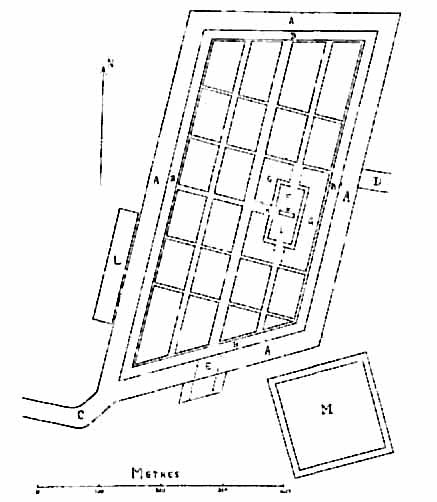
“At Castellazzo di Fontanellato, a little west of Parma, are the vestiges of a settlement which, with its defences, covered an area of about forty-three acres. In outline it was four-sided; its east and west sides were parallel to one another. Round it ran a solid earthen rampart, 50’ (15m) broad at the base and strengthened with woodwork . In front of the rampart was a wet ditch (A), 100’ wide, fed with fresh water from a neighbouring brook by an inlet at the south-western corner (C) and emptied by an outfall on the east (D). One wooden bridge gave access to this artificial island at its southern end (E)".


"The area within the rampart, a little less than thirty acres in extent, was divided into four parts by two main streets, which would have intersected at right angles had the place been strictly rectangular; other narrower streets ran parallel to these main thoroughfares. On the east side (F) was a small 'citadel'—arx or templum—with ditch, rampart and bridge of its own (G, H); in this were a trench and some pits (K) which seemed by their contents to be connected with ritual and religion. Outside the whole (L, M) were two cemeteries, platforms of urns set curiously like the village itself, and also a little burning ghat. The population of the village is reckoned to be four or five thousand, crowded into small huts”.


References:

  • Spiro Kostof, The City Shaped, 1991
  • F. Haverfield, Ancient Town-Planning, 1913, download from Project Gutenberg

Related Post:

Subscribe to Tessellar Blog
and get a FREE E-Book
HONEYCOMB HOUSING
An Affordable Alternative to Terrace Housing


17MB, 49 A4 pages, 57 illustrations


Social Bookmarking
Add to: Digg Add to: Del.icio.us Add to: Reddit Add to: StumbleUpon Add to: Yahoo Add to: Google Add to: Technorati Information

Saturday, November 10, 2007

Actually Useful Minimalism

I'm not a fan of architectural minimalism. To me its modern architecture stripped of it's original social idealism. Minimalism is just another "style" which always turns out to be deceptively expensive.

Late last month, my friend Peter Davis held a seminar at his home. One of his guest speakers was another long-time colleague, Yogen, who showed his work as an agricultural contractor. Among other things, he builds really cheap animal housing using minimal structure.


Biologically secure closed housing for poultry, installed with cooling system


And Yogen has also developed and implemented a very cost effective cooling system for the buildings.

Now this, in my opinion, is what minimalism should be about:

Picasa SlideshowPicasa Web AlbumsFullscreen


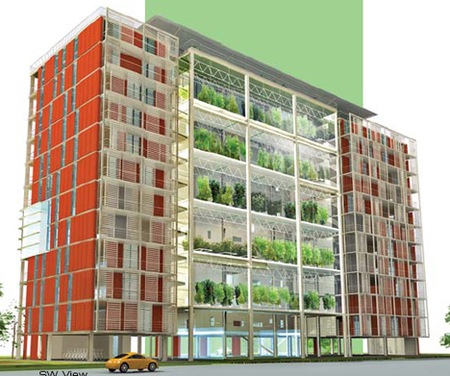
Contrast this with this "Agro-Housing" proposal for Wuhan in China. Here housing and high-tech farming is fit together in a high-rise structure. No way is this going to be economically feasible.


Agro-Housing, from architecture.myninjaplease.com

Tack on the buzz-word "sustainable", and that seems enough to justify the craziest sorts of ideas.


Related Post:


Enter your Email


Preview | Powered by FeedBlitz

Subscribe in a reader


Social Bookmarking

Add to: Digg Add to: Del.icio.us Add to: Reddit Add to: StumbleUpon Add to: Yahoo Add to: Google Add to: Technorati Information

Friday, November 2, 2007

GREEK TOWN-PLANNING: THE MACEDONIAN AGE

After Alexander the Great conquered Western Asia in the 4th century BC, he and his successors founded new cities. Discharged soldiers become their first citizens. Many of these were laid out with a regular 'chess-board' street-plan.

Alexander himself and his architect, one Dinocrates of Rhodes or perhaps of Macedonia, seem to have employed it at Alexandria in Egypt. Antioch, its port, Seleucia Priera, Apamea and Laodicea – all founded by Seleuceus I – have blocks of the same size (112m x 58m). The grid plan, history shows, is much liked by military colonizers.

An example is Priene, a little town on the east coast of the Aegean. Early in the Macedonian age it was re-founded. It had about 400 individual dwelling-houses and a population of about 4,000.

It provides an interesting case of the grid applied to a steeply sloping site. But it is a rather functional arrangement: no striking artistic effects appear to have been attempted. No streets give vistas of stately buildings. No squares, other than the Agora, provide open spaces where larger buildings might be grouped and properly seen. Open spaces were very rare in Priene. Gardens, seem entirely absent.


PLAN OUTLINE OF PRIENE
A, B, C. Gates. D, E, F, H, M, P. Temples (see fig. 7). G. Agora, Market. I. Council House, K. Prytaneion. L, Q. Gymnasium. N. Theatre, O. Water-reservoir, R. Race-course, from Haverfield


Perspective view, from Haverfield

But the Greek grid was alien to many of the local cultures conquered by Alexander. Many reverted to original ways – buildings encroached into the wide streets, and open space were taken over by small shops and stalls, and the grid would lose its form.

References: Spiro Kostof, The City Shaped, 1991.
F. Haverfield, Ancient Town-Planning, 1913, download from Project Gutenberg

Related Post:


Enter your Email


Preview | Powered by FeedBlitz

Subscribe in a reader


Social Bookmarking
Add to: Digg Add to: Del.icio.us Add to: Reddit Add to: StumbleUpon Add to: Yahoo Add to: Google Add to: Technorati Information

Sunday, October 28, 2007

So you want to be an architect?

One of my favourite architectural blogs is by Calvin Ngan, an architectural student in Australia. He is certainly my favourite Malaysian blogger. This young man may not be as sophisticated as other bloggers, but he is by turn, funny, intelligent, and very angry. He reminds me of what it means to be a young wannabe architect, who’s not sure that that is what he wants to be. For a sample:

“So you want to be an architect?”


"Well, a lot of people say that their dream is to become an architect, but what kind of architect they want to be? If you’re talking about building a virtual world then I am sure that you know the guy from the matrix movie - The Architect."


"I don’t know why did the Wakiki(sic)Brothers name him simply as The Architect, but what I couldn’t understand is that how in the world did the people from the computer industry monopolise the definition for architect. Simply do a search for the keyword “architect” and chances are you’re likely to get a lists of computer related websites. No wonder Bill Gates called himself Chief Software Architect. Now, that is the kind of architect I want to be - filthy rich.”


His best posts are those where he writes about Malaysia, where he questions architecture, and when he agonizes about why the hell he should try to become an architect:


A glimpse into my past


What is architecture?


Happy Independence Day


Postcards from Malaysia


World’s Oldest Profession


Foster & Partners: Petronas University of Technology


Related Post:


Enter your Email


Preview | Powered by FeedBlitz

Subscribe in a reader


Social Bookmarking
Add to: Digg Add to: Del.icio.us Add to: Reddit Add to: StumbleUpon Add to: Yahoo Add to: Google Add to: Technorati Information